Business Name: BeeHive Homes of Page - Elk Road
Address: 95 Elk Rd, Page, AZ 86040
Phone: (928) 613-2643
BeeHive Homes of Page - Elk Road
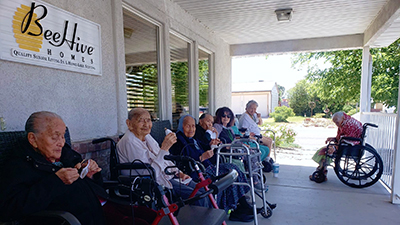
Serving the lakeside community of Page, AZ this new modern Bee Hive home is located not too far from Lake Powell Blvd. across from the golf course. Private and shared rooms are available for reduced cost for all levels of care. The outdoor patio and putting green is a great place to relax and enjoy the beautiful desert scenery. Several members of our experienced staff have been with us for nearly 10 years and the quality of care is exceptional. This is a beautiful place to live and the residents really enjoy the modern decor.
95 Elk Rd, Page, AZ 86040
Business Hours
Monday thru Sunday: Open 24 hours
TikTok: https://www.tiktok.com/@beehivehomesofpage
Facebook: https://www.facebook.com/beehivepageelk/
Families normally reach assisted living at a point of pressure, not leisure. A parent has fallen two times in three months. Medications have actually ended up being complicated or avoided. A partner with early dementia has actually started wandering during the night. Your home that as soon as represented stability now feels risky, and adult kids are pulled between work, caregiving, and their own families.
When you begin checking out senior care choices, the range is excessive. Large campuses with theaters and restaurants, small board and care homes tucked into residential communities, specialized memory care units, brief stay respite care programs. Pamphlets guarantee security, self-respect, self-reliance. What many families actually crave is something much easier: a place where their loved one will be understood, genuinely monitored, and not lost in a crowd.
Over the previous twenty years working in elderly care, I have seen that little assisted living homes often provide that sensation of safety and individual connection more regularly than large communities. They are not the ideal response for every scenario, and they bring their own restrictions, yet for many older adults they offer a balance that feels closer to "home" than "center."
This is an attempt to unload why.
What "small assisted living" normally means
The label "assisted living" covers a wide spectrum. At one end, there are resort design neighborhoods with numerous apartment or condos, several dining locations, and a calendar that looks like a cruise liner schedule. At the other, there are 6 to twelve bed homes on peaceful streets, typically converted single family houses certified to provide senior care.
When I speak about small assisted living homes, I mean those residential scale settings with a restricted number of homeowners, typically:
- Licensed for roughly 4 to 16 residents Staffed by a handful of caregivers per shift Located in routine neighborhoods Run by an owner or director who is on website frequently
Terminology varies by state. You will hear "board and care," "RCFE," "residential care home," or "individual care home." Regulations vary, but the standard design is comparable: assisted living and often memory care provided in a home sized environment.
For households utilized to thinking in terms of "nursing homes," this can feel unfamiliar. Yet for numerous older grownups who do not require complete skilled nursing, these environments fit both their care needs and their psychological needs remarkably well.
Why smaller sized often feels safer
When individuals say a location "feels safe," they are seldom referring only to grab bars and smoke alarm. They are typically describing a mix of visibility, predictability, and human attention. In a little home, a number of useful elements come together to produce that impression.
First, the scale itself limits how much can be missed. In a 10 bed home, a caregiver strolling from the kitchen area to the living-room passes most bedroom doors. If a resident is trying to stand from a recliner unassisted, someone is most likely to observe. Informal guidance is developed into the geography.
Second, staff know what "regular" looks like for each resident, often in surprising detail. When you take care of a lots people day after day, you discover who usually eats the whole bowl of oatmeal and who just picks at toast, whose gait senior care is constantly a bit unstable and who suddenly seems slower this week. That standard understanding is crucial for early detection of problems.
I remember one resident, Mr. K, who lived in a 12 bed home where I sought advice from. He was relatively independent, still strolled the yard course every morning. One day a caretaker discussed quietly, "He got tired midway today and muffled the bench. That is not like him." They examined his oxygen saturation, which was lower than normal, and called his medical care workplace. Within 24 hr he was identified with a moderate pneumonia and started on treatment. In a bigger setting, a single shorter walk may not have registered the exact same way.
Third, smaller sized homes tend to have less layers between choice makers and everyday care. If a caretaker is worried about a new swelling or a change in cravings, the owner or administrator is typically in the structure or a quick telephone call away. There is less administration to push through before acting. Families pick up that responsiveness, and it feels safe.
From an ecological standpoint, smaller sized homes also normally include:
- Shorter distances in between rooms Fewer elevators and long corridors Quieter, less chaotic common areas Direct views in between personnel and residents
That makes a difference for fall threat, nighttime wandering, and general anxiety. For someone with mobility problems, the possibility of navigating a long corridor to reach the dining room two times a day can produce fear. Walking twenty feet to a little dining area feels more manageable, which self-confidence itself reduces risk.
The emotional side of safety
Physical security is only part of the equation. Emotional safety matters just as much in elderly care, specifically for those with cognitive changes.
In many large assisted living neighborhoods, personnel are kind and well trained, however the roster turnover and large variety of homeowners make deep familiarity tough. Homeowners may acknowledge faces, however not always feel known. For somebody who has actually currently lost parts of their memory or physical self-reliance, that can feel like being adrift.
In little homes, relationship tends to end up being the arranging concept. A resident is not "in apartment or condo 310." She is "Mrs. Harris, who likes chamomile tea at 8 pm and desires the newspaper folded before breakfast." That knowledge is not hidden in a care strategy binder. It resides in the daily routines of the staff.
I have sat at long dining tables in these homes and seen subtle emotional care in action: a caretaker discovering that Mr. Lopez is gazing out the window a bit longer than typical and bring up a chair to ask about his favorite fishing spot, another carefully rerouting a baffled resident by handing them a basket of napkins to fold throughout an uneasy spell. These are little moments, yet for families they respond to one of the most basic worry: "Will somebody notice when my mom is struggling, even if she can not request help clearly?"
That is particularly vital in memory care. Residents with dementia typically can not promote on their own, may misinterpret environments, and can intensify into stress and anxiety or agitation rapidly. A little setting decreases the quantity of sensory input they must process and allows staff to react early to subtle cues.
How care is individualized in smaller homes
Personalization is a fashionable term, but in elderly care it has a concrete significance: how particularly does the everyday routine fit the individual, instead of forcing the person to fit the routine.
Large assisted living and memory care communities do work hard on this. They establish personalized care strategies, ask about life histories, and deal differed activities. Yet logistical realities push toward standardization. Meals at set times, group bathing schedules, medication passes done on a rigorous route.
In a little home, there is more room to flex the structure to match individual preferences. That can look like:
A resident who always oversleeped up until 10 am being permitted to keep that habit, rather than being pulled into a 7:30 breakfast. A retired night nurse who stays more comfy keeping up later on with personnel working silently in the kitchen area nearby. A devout resident having area and personal privacy set aside for daily prayer at a specific hour, with staff adjusting shower times around it.
For those with dementia, customization can imply constructing the day around preserved capabilities instead of losses. I remember a female who had actually been a teacher for 35 years, now in moderate stage Alzheimer's disease. She was quickly distressed in loud groups however became calmer when offered tasks that resembled class preparation: sorting colored pencils, arranging paper stacks, "examining" children's books. In a small memory care home, staff wove that into her day naturally. In a larger structure, where activity calendars were focused on large group events, it had been harder to sustain that level of tailored engagement.
Assisted living staff in little homes likewise tend to understand family dynamics deeply. They understand which child is useful and desires difficult data on high blood pressure readings, and which child calls every night primarily needing reassurance. That comprehending lets them communicate in manner ins which defuse conflict rather than inflame it.
Staffing truths: ratios, continuity, and burnout
Families frequently ask, "What is your staff to resident ratio?" It is a practical concern, yet it only tells part of the story.
Small assisted living homes typically report ratios that look favorable on paper. For instance, 2 caregivers for ten homeowners during the day, and one awake over night, often with a live in employee on the properties. Bigger communities may have more complex staffing structures, with different med techs, caregivers, and nurses rotating throughout wings.
The advantage in little homes is less about the raw ratio and more about connection. The same two or 3 caretakers tend to cover many weekday shifts, another small group covers weekends. Citizens and staff recognize each other quickly. Caregivers discover which homeowners can wait five minutes for a bathroom call and which can not, who is safe to walk behind unaided and who need to be side by side, who will attempt to get up from bed without calling at 3 am if they drank tea too late.
Continuity likewise minimizes errors. A familiar caregiver is more likely to capture that a medication blister pack looks various this month and question it. They are more likely to notice weight changes when helping a resident gown. In memory care, they quickly see when a new habits belongs to a pattern or a separated incident.
The challenge, naturally, is that small homes typically run lean. If one caretaker calls out ill at brief notification, there is less backup. Owners who run these homes well build pools of on call staff, step in themselves, and maintain cross training. Families evaluating a home ought to not only inquire about normal staffing, but likewise how the home deals with spaces, getaways, and emergencies.
Burnout is another quiet aspect. In a large building, personnel might be stretched thin across lots of residents, yet the work is somewhat dispersed. In a small setting, if care needs increase suddenly for two or 3 individuals at the same time, the concern can land greatly on a tiny personnel team. Excellent operators respond by including additional hours, employing agency assistance briefly, or bringing hospice partners into the conversation. Poor operators merely press personnel more difficult and hope nobody falls.
When small homes are attentive to staffing health, the outcome is a level of caregiving stability that homeowners and households feel immediately. I have actually seen caretakers stay with the very same 8 bed home for a decade, shepherding citizens from their first day of move in through the last days of hospice. That sort of connection is extraordinarily unusual in institutional settings.
Memory care in a little setting: promise and limits
Dedicated memory care systems inside large communities can offer protected borders, specialized activity programs, and nursing oversight. They are essential resources for lots of households. Yet they can also feel overstimulating for locals in mid or later stages of dementia: TVs in typical locations, overhead statements, a consistent parade of staff.
Small memory care homes that take just residents with cognitive impairment method security differently. Rather than locking down a big yard, they may fence a workable garden where every corner is visible from the back deck. Rather of a big group activity space, they depend on the living-room, dining table, and backyard as natural event spaces.
The advantages are simple. A resident who starts to rate is never far from a familiar caregiver. Noise levels are simpler to manage. Triggers for agitation, like crowded hallways or too many unfamiliar faces, are reduced.
However, little memory care homes likewise have tough limits. They hardly ever have licensed nurses on site 24 hours a day. If a resident develops extreme behavioral signs requiring regular medication adjustments, or complex medical concerns like advanced diabetes management, they may be better served in a bigger neighborhood with stronger medical infrastructure or in a nursing facility.

Families sometimes feel blindsided when a little home states, "We can no longer securely fulfill your loved one's requirements." From the operator's viewpoint, this is often an ethical decision instead of a convenience. A 10 bed home without night nursing can not safely manage a resident who starts to fall multiple times a week regardless of interventions, or who ends up being physically aggressive, placing others at risk.
Understanding this from the outset assists. When you tour, ask straight: "What kinds of changes would make you say that my parent requires a higher level of care?" A transparent answer is an excellent sign.
Respite care: trying small assisted living on for size
For households who are not sure whether their loved one will tolerate a relocation, respite care can offer a low commitment trial. Numerous little assisted living and memory care homes use short stays, frequently from one week to a couple of months, where a senior lives in the home temporarily while getting the same level of support as long term residents.
Respite stays serve numerous functions. They give the older adult an opportunity to experience the environment without the pressure of an irreversible decision. They give the household a much required break from round the clock caregiving. And they let everyone evaluate fit: Is mom more unwinded in this smaller sized setting, or does she seem bored? Is dad less anxious during the night when staff neighbor, or does he bristle at any loss of control?
I worked with a household caring for an 84 years of age father with moderate dementia and significant nighttime roaming. The daughter was convinced he would refuse any move, yet she was sleeping with one eye open every night, terrified of him leaving your home. They arranged a 3 week respite remain in a 6 bed memory care home under the pretext of "helping Dad recover after a healthcare facility visit." To the child's awe, he settled rapidly and started signing up with small group songs in the living room each afternoon. By the 2nd week, she told me, "He actually appears calmer there than at home." That respite stay eventually ended up being a long-term relocation, but because it began as a short-term step, everyone felt less caught by the decision.
Respite care is also a chance to test how the home communicates. During the stay, you must get updates about sleep, appetite, mood, and any events. Focus not only to what is reported, but to the tone. Are personnel merely documenting events, or do they offer thoughtful observations and adjustments?
When a bigger neighborhood might be better
Small assisted living homes are not a universal service. There are clear circumstances where a larger neighborhood or higher level of care is more appropriate.
Residents with complicated medical requirements that verge on competent nursing typically require the on website existence of certified nurses, rehab therapists, and regular physician oversight. For example, someone with phase IV congestive heart failure on numerous titrated medications, or an insulin dependent diabetic with extremely labile blood sugars, might surpass what a small residential home can safely manage.
Some older grownups really thrive with more stimulation than a little home can provide. Extroverted residents who enjoy consistent activity options, structured classes, and a wide array of peers may find a small group restricting. I took care of a retired music professor who lasted precisely 3 weeks in a relaxing 8 bed home before declaring, rather reasonably, that he missed out on the energy of the bigger continuing care neighborhood he had actually formerly visited. He moved to the bigger campus, joined three clubs within a month, and was plainly happier.
Couples with mismatched needs in some cases discover better choices in bigger settings as well. If the wife requires memory care and the partner is still fairly independent, a community with both assisted living and independent living on one campus can lower separation. Some little homes can take the partner with higher requirements and enable the much healthier partner to visit daily, yet that arrangement is not constantly sustainable.
Cost and location also matter. Small homes in particular regions are limited or priced greater than mid market assisted living neighborhoods. Families sometimes need to consider distance to their own homes, particularly if they plan to visit a number of times a week.
The key is to see little homes as one tool in the senior care tool kit, not a universal response. The ideal fit depends on care needs, character, household involvement, and monetary reality.
What to search for when touring a small assisted living home
A polished website or kind marketing director can not substitute for what you observe in person. When you tour, your senses are your best guides. One focused list can assist you arrange impressions without decreasing the experience to numbers alone.
Consider paying unique attention to these points during your visit:
- Staff presence: Are caretakers noticeable, engaged with citizens, and calm, or are they mainly in the workplace or kitchen? Resident mood: Do locals look typically relaxed, groomed, and appropriately dressed, or do a number of appear distressed or unattended? Cleanliness and smells: Does the home odor like a resided in house, or exist relentless odors of urine, harsh chemicals, or heavy air freshener covering something else? Communication design: Do staff address citizens by name, make eye contact, and describe what they are doing, or do they talk over citizens as if they are not present? Flexibility: When you inquire about customized routines, do you hear specific examples of how they adjust, or only rigid schedules that everybody must follow?
During a great tour, you should feel able to ask direct questions about falls, hospitalizations, and personnel turnover. Transparent homes do not pretend bad things never ever occur. Rather, they describe what they found out and how they adjusted.
Also observe how they discuss citizens with memory loss. Language matters. Staff who speak respectfully, prevent labels like "wanderer" or "challenging," and focus on staying strengths reflect a deeper culture of dignity.
Key questions to ask the administrator or owner
A list of targeted concerns can expose more than an inch thick package of printed policies. When you meet with the administrator or owner of a little assisted living or memory care home, you might utilize concerns such as:
- "Can you describe a resident whose requirements ended up being undue for you to manage, and how you dealt with that shift with the family?" "When a caretaker calls out at the last minute, what does your backup strategy actually look like on a Saturday night?" "How do you coordinate with hospice or home health if my parent eventually requires those services here?" "Tell me about a time something went wrong - a fall, a medication mistake - and what altered later." "If my parent becomes more confused or agitated in the evening, what particular techniques do your personnel usage before turning to medication?"
Notice how they respond. Truthful operators might admit previous errors and explain useful enhancements. Avoid places that instantly resort to unclear guarantees or become protective when pressed.
Balancing head and heart in the final choice
Choosing an assisted living, memory care, or respite care setting for somebody you love is among the more emotionally loaded decisions most families will ever make. It sits at the crossway of security, autonomy, financial resources, and long held household promises.
Small assisted living homes frequently feel more secure and more individual due to the fact that they compress that choice into a human scale environment. Regimens show up. Personnel are not remote uniforms however individuals you welcome by name. Your mother's preferred chair can suit the living room. The cook knows which dessert your father must avoid since of his blood glucose, and which he will accept substitute fruit for without feeling punished.
Those qualities do not appear by mishap. They grow from thoughtful staffing, attentive management, and an understanding that elderly care is as much relational as it is scientific. When succeeded, little homes can supply an environment where older adults, even with substantial requirements, still experience days that make good sense, feel seen, and maintain a sense of belonging.
The work for families is to look beyond layout and facilities lists, to test those relational qualities with cautious concerns, truthful observation, and, when possible, brief respite stays. Numbers such as staff ratios and monthly fees are important, yet the quieter indications - a hand on a resident's shoulder at the ideal minute, a team member who remembers your father's war stories from last visit - are often the ones that inform you whether this particular home will genuinely feel both safer and more personal.
BeeHive Homes of Page - Elk Road provides assisted living care
BeeHive Homes of Page - Elk Road provides memory care services
BeeHive Homes of Page - Elk Road provides respite care services
BeeHive Homes of Page - Elk Road supports assistance with bathing and grooming
BeeHive Homes of Page - Elk Road offers private bedrooms with private bathrooms
BeeHive Homes of Page - Elk Road provides medication monitoring and documentation
BeeHive Homes of Page - Elk Road serves dietitian-approved meals
BeeHive Homes of Page - Elk Road provides housekeeping services
BeeHive Homes of Page - Elk Road provides laundry services
BeeHive Homes of Page - Elk Road offers community dining and social engagement activities
BeeHive Homes of Page - Elk Road features life enrichment activities
BeeHive Homes of Page - Elk Road supports personal care assistance during meals and daily routines
BeeHive Homes of Page - Elk Road promotes frequent physical and mental exercise opportunities
BeeHive Homes of Page - Elk Road provides a home-like residential environment
BeeHive Homes of Page - Elk Road creates customized care plans as residents’ needs change
BeeHive Homes of Page - Elk Road assesses individual resident care needs
BeeHive Homes of Page - Elk Road accepts private pay and long-term care insurance
BeeHive Homes of Page - Elk Road assists qualified veterans with Aid and Attendance benefits
BeeHive Homes of Page - Elk Road encourages meaningful resident-to-staff relationships
BeeHive Homes of Page - Elk Road delivers compassionate, attentive senior care focused on dignity and comfort
BeeHive Homes of Page - Elk Road has a phone number of (928) 613-2643
BeeHive Homes of Page - Elk Road has an address of 95 Elk Rd, Page, AZ 86040
BeeHive Homes of Page - Elk Road has a website https://beehivehomes.com/locations/page/
BeeHive Homes of Page - Elk Road has Google Maps listing https://maps.app.goo.gl/AnsyxFvEcvkNBkiW6
BeeHive Homes of Page - Elk Road has TikTok page https://www.tiktok.com/@beehivehomesofpage
BeeHive Homes of Page - Elk Road has Facebook page https://www.facebook.com/beehivepageelk/
BeeHive Homes of Page - Elk Road won Top Assisted Living Homes 2025
BeeHive Homes of Page - Elk Road earned Best Customer Service Award 2024
BeeHive Homes of Page - Elk Road placed 1st for Senior Living Communities 2025
People Also Ask about BeeHive Homes of Page - Elk Road
What is our monthly room rate?
Our all-inclusive monthly rate is $5,600. This includes meals, activities, medication management, daily care, and supervision. There are no hidden costs or surprise fees
Can residents stay in BeeHive Homes until the end of their life?
Usually yes. There are exceptions, such as when there are safety issues with the resident, or they need 24 hour skilled nursing services
Do we have a nurse on staff?
No, but each BeeHive Home has a consulting Nurse available 24 – 7. if nursing services are needed, a doctor can order home health to come into the home
What are BeeHive Homes’ visiting hours?
Visiting hours are adjusted to accommodate the families and the resident’s needs… just not too early or too late
Do we have couple’s rooms available?
Yes, couples can share a room at BeeHive Homes of Page. Room availability may vary due to our state-licensed capacity, so please ask about current options
Where is BeeHive Homes of Page - Elk Road located?
BeeHive Homes of Page - Elk Road is conveniently located at 95 Elk Rd, Page, AZ 86040. You can easily find directions on Google Maps or call at (928) 613-2643 Monday thru Sunday: Open 24 hours
How can I contact BeeHive Homes of Page - Elk Road?
You can contact BeeHive Homes of Page - Elk Road by phone at: (928) 613-2643, visit their website at https://beehivehomes.com/locations/page/ or connect on social media via TikTok or Facebook
Conveniently located near Beehive Homes of Page - Elk Road Mesa Theatre a great movie theater with full food & drink menu. Catch a movie and enjoy some great food while you wait.